Wieliczka Salt Mine
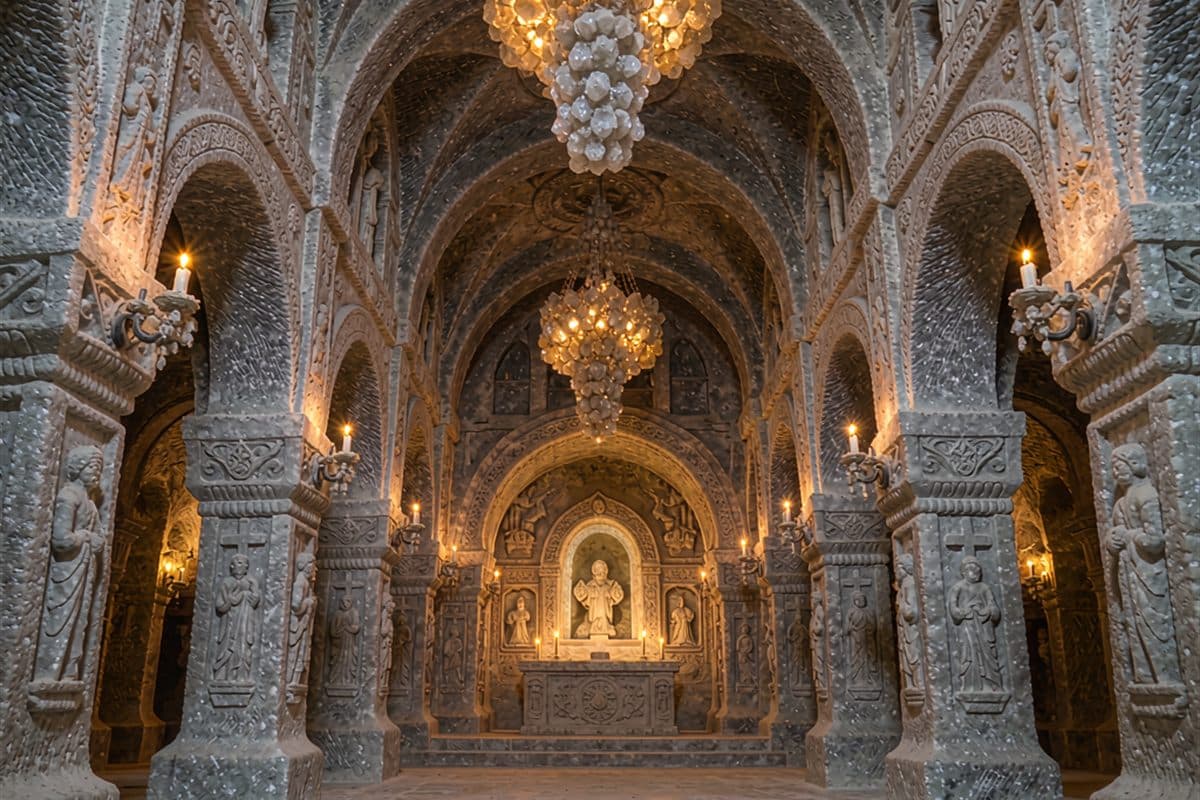
A labyrinth of salt mines 700 years in the making, with chapels and chandeliers carved from salt crystal by hand.
Overview
The Wieliczka Salt Mine was worked from the 13th century until 1996, reaching a depth of 327 metres with 287 kilometres of passages, and is a UNESCO World Heritage Site. It contains some 3,000 chambers, of which the Chapel of St Kinga is the most astonishing: in a hall 12 metres high, the floor, walls, altar and figures are all carved from rock salt, and even the chandeliers are made of salt crystal.
History
Salt has been mined at Wieliczka since the 13th century, and the revenue it generated helped fund the construction of Kraków's castles and churches. The mine was placed on the first UNESCO World Heritage list in 1978, alongside Kraków's old town. Mining ceased in 1996 because of flooding and falling salt prices, and the workings are now maintained solely for tourism and as a museum.
Highlights
- •The Chapel of St Kinga
- •The underground salt lake
- •700 years of mining history
Practical tips
- •Book in advance; the tour sells out in summer
- •There are many stairs, so wear comfortable shoes
Practical information
- Best time
- Year-round
- Tickets
- About PLN 89
- Opening hours
- 7:30 to 19:30
- Local food
- Polish dumplings, smoked cheese and apple pie
- Getting around
- Zakopane is reached by bus, and the Tatra Mountains suit hiking and skiing
- Visa
- Poland is in the Schengen area and requires a short-stay Schengen visa. Book an appointment early with complete travel documents.
Traveller reviews
…