Rotorua
★ 4.6🇳🇿 RotoruaSuggested visit 1-2 daysBest season Year-round; October to April has the best weather
GeothermalMāori cultureHot springs
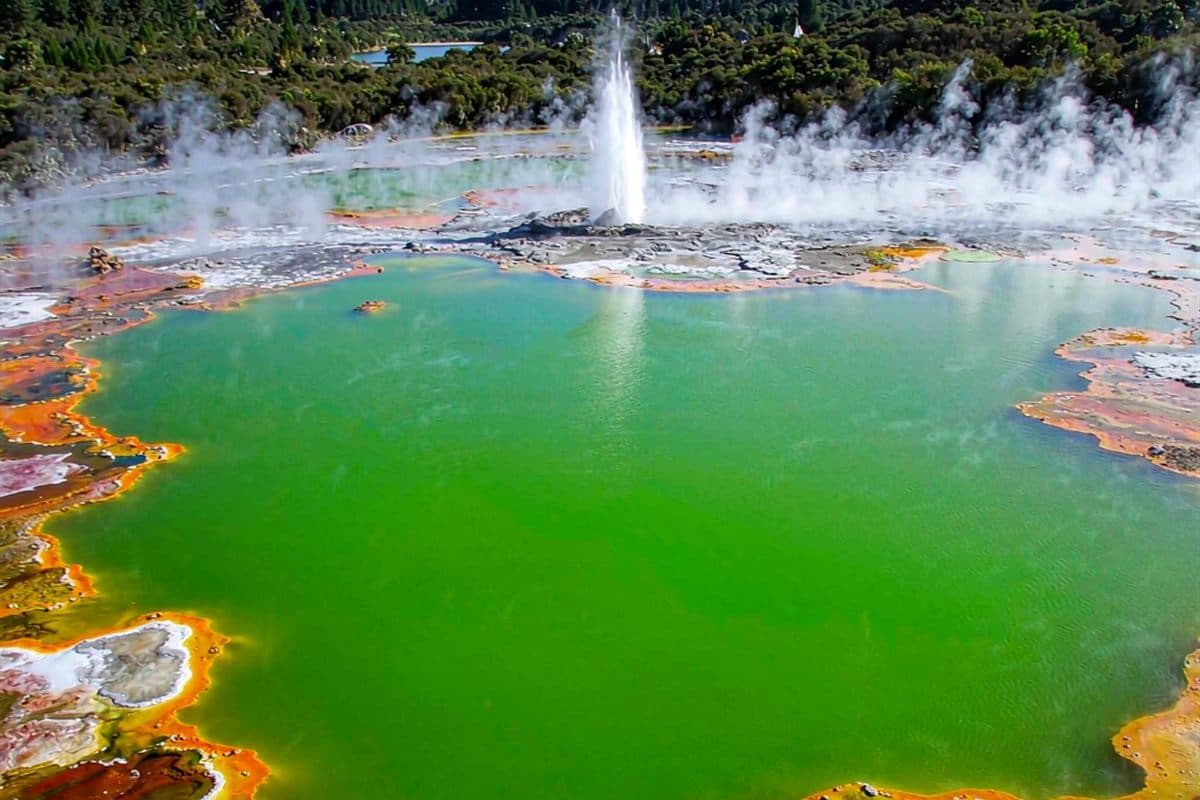
Boiling mud pools, geysers and Māori villages in one town — New Zealand's geothermal and cultural heart.
Overview
On the volcanic belt of the North Island, Rotorua is surrounded by geothermal activity. Te Puia and Wai-O-Tapu hold geysers, the coloured Champagne Pool and boiling mud, with a sulphur smell in the air. It is also a centre of Māori culture: the village and performances at Te Puia and the carving and weaving school by the lake show traditional crafts, and the Polynesian Spa offers hot pools.
History
Māori settled here from the 14th century, using the geothermal heat for cooking and warmth; it became a spa and tourist town in the 19th century and is now a key centre of Māori culture.
Highlights
- •The geyser at Te Puia
- •The Champagne Pool at Wai-O-Tapu
- •Māori villages and haka performances
- •The Polynesian Spa
Practical tips
- •Geothermal water is scalding — stay on the paths
- •The sulphur smell is strong; bring a mask if sensitive
Practical information
- Best time
- October-April
- Tickets
- Te Puia about NZD 90; Wai-O-Tapu about NZD 40
- Opening hours
- Sites roughly 8:00-17:00
- Local food
- Hangi, lamb, kiwifruit
- Getting around
- About three hours by car from Auckland, or an hour from Taupō.
- Visa
- A visa is required; a NZeTA can be applied for online.
Traveller reviews
…