Gobi Desert
★ 4.7🇲🇳 OmnogoviSuggested visit 4-7 daysBest season May to September, when it is warmer and tracks are passable
NatureDesertAdventure
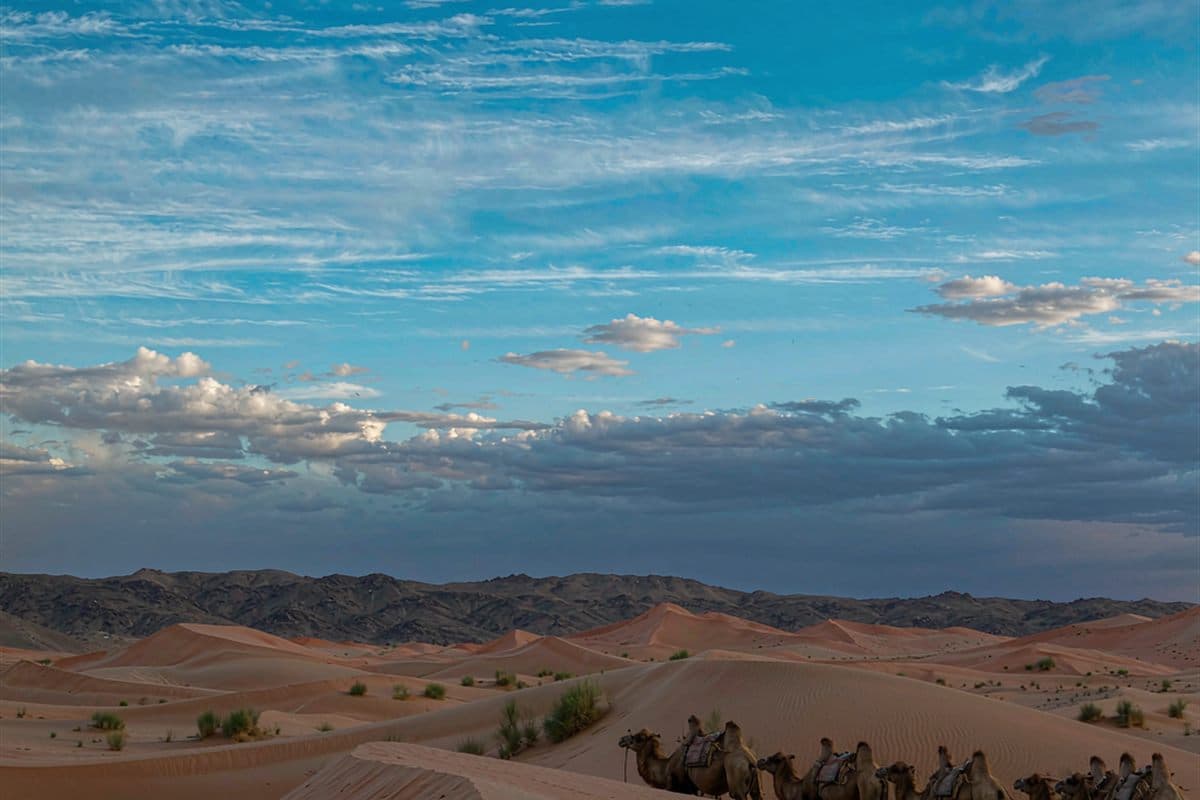
Asia's largest transition zone between desert and steppe, where dunes, flaming cliffs and dinosaur fossil beds make up the wilderness.
Overview
The Mongolian Gobi is not all dunes: gravel plains, steppe and sand hills interweave. The Khongoryn Els in the south rise as high as 300 metres and hum in the wind, earning the name singing dunes. Bayanzag, the Flaming Cliffs, is known for its orange-red walls and dinosaur egg discoveries, while Yolyn Am and the Chuluut canyon extend the route.
History
Its Cretaceous strata hold abundant dinosaur fossils excavated by international expeditions from the 1920s, making it a landmark in palaeontology and a heartland of Mongolian nomadic culture.
Highlights
- •The singing dunes of Khongoryn Els
- •The Flaming Cliffs at Bayanzag
- •The Yolyn Am ice canyon
- •Gobi herders and their camels
Practical tips
- •Distances are large — allow four to seven days
- •Day-night temperature swings are extreme; bring layers and windproof gear
Practical information
- Best time
- May-September
- Tickets
- Sites charge separately; tours usually include vehicle and guide
- Opening hours
- Open all day; by arrangement
- Local food
- Boiled mutton, milk tea, dried curd
- Getting around
- Fly from Ulaanbaatar to Dalanzadgad, or drive across; usually four to seven days.
- Visa
- Visa-free for stays up to 30 days with a valid passport.
Traveller reviews
…