Fes el-Bali
★ 4.7🇲🇦 FesSuggested visit 1 dayBest season March to May and September to November, with mild weather
World HeritageMedieval old townCrafts
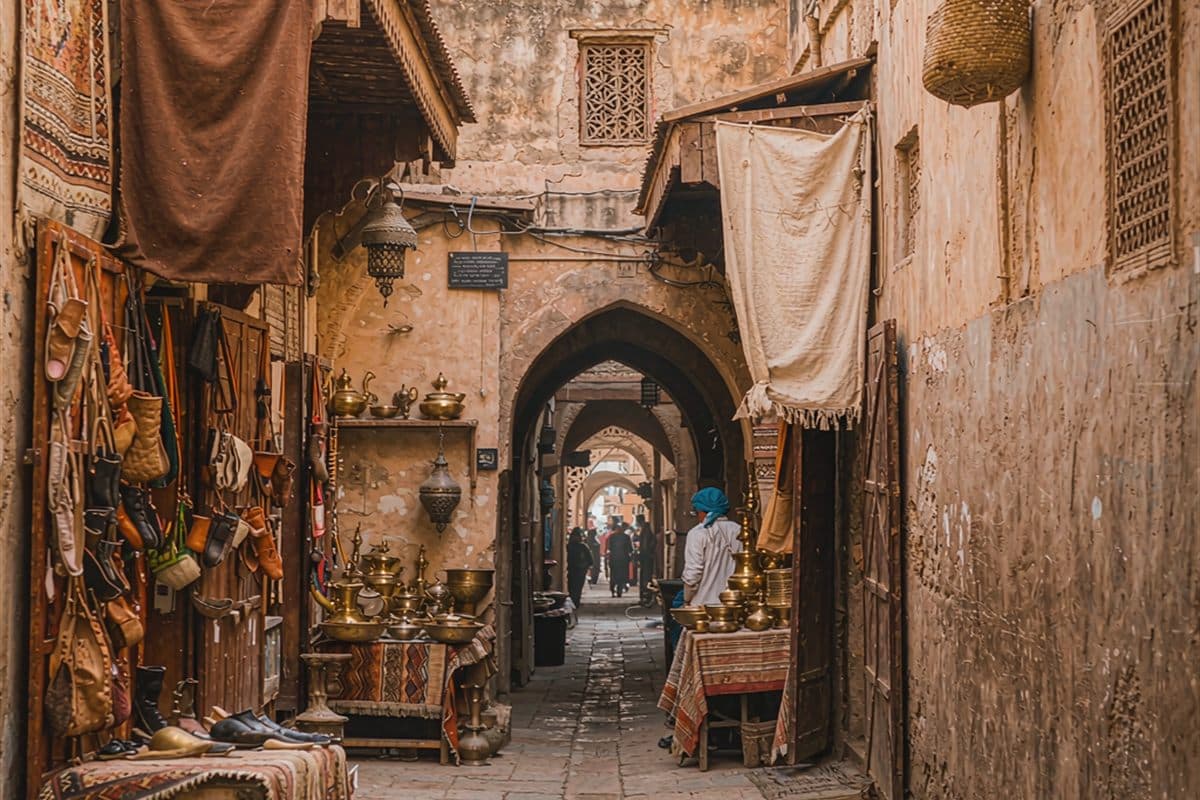
One of the largest car-free urban areas in the world, its thousands of lanes hiding dye pits, madrasas and centuries-old crafts.
Overview
Built in the 9th century across about 220 hectares, Fes el-Bali is among the largest car-free urban areas anywhere. Its lanes number in the thousands, with leather dye pits, copper workshops and carpet ateliers still working in traditional ways. The Qarawiyyin mosque and university, founded in 859, is regarded as one of the oldest continuously operating seats of learning. It joined the World Heritage List in 1981.
History
Founded in 809 under the Idrisid dynasty, it peaked as a centre of learning and trade under the Marinids in the 13th to 15th centuries.
Highlights
- •The Chouara leather dye pits
- •The Qarawiyyin mosque and university
- •Bou Inania Madrasa
- •Bab Bou Jeloud and the medina lanes
Practical tips
- •It is easy to get lost — a local guide helps
- •The dye pits smell strong; mint leaves are handed out at the entrance
Practical information
- Best time
- March-May, September-November
- Tickets
- The medina is free; madrasas about MAD 70
- Opening hours
- Medina open all day; dye pits roughly 8:00-18:00
- Local food
- Fes tagine, harira soup, almond pastries
- Getting around
- About three to four hours by train from Rabat or Casablanca.
- Visa
- Visa-free for stays up to 90 days with a valid passport.
Traveller reviews
…