Gyeongbokgung Palace
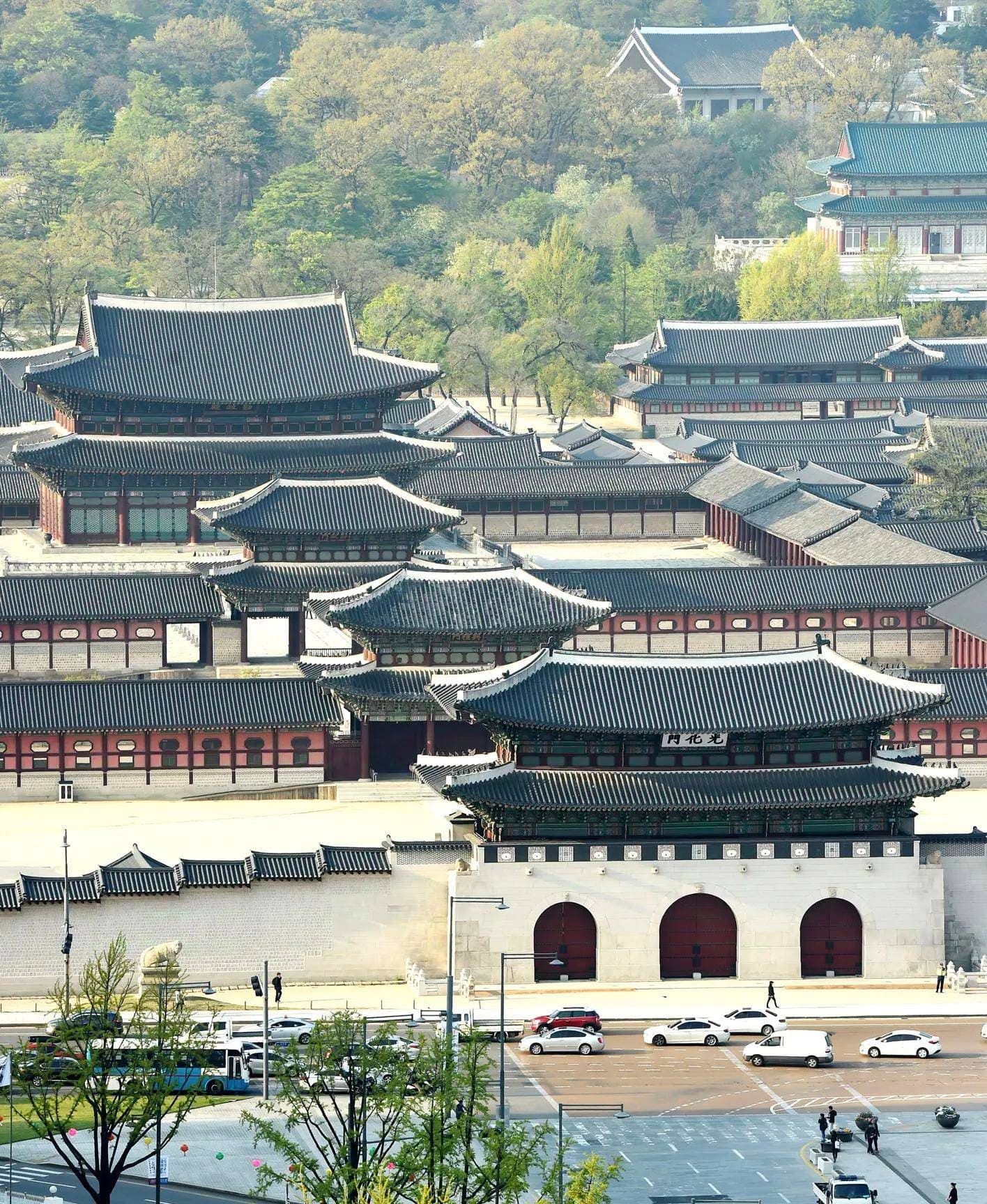
The spiritual heart of the Joseon dynasty and the grandest of its five palaces — Seoul's most popular spot for hanbok photo walks.
Overview
Gyeongbokgung is the largest palace of the Joseon dynasty, built in 1395. Its imposing architecture makes it an essential place to understand traditional Korean culture.
History
Built in 1395 by order of King Taejo, founder of the Joseon dynasty, Gyeongbokgung served the royal family through five centuries from 1392 to 1897. It was burned by Japanese forces during the 1592 invasion and rebuilt in 1868 under King Gojong. After Japan annexed Korea in 1910, the colonial administration deliberately built the Governor-General's building across the palace's central axis; it was demolished in 1995 to restore the original layout. More than 30 percent of the palace has now been reconstructed, and the National Folk Museum and National Palace Museum stand nearby.
Highlights
- •The impressive double sweep of Gwanghwamun Gate and Geunjeongjeon Hall
- •A sense of walking through history in rented hanbok
- •The regularly staged royal guard-changing ceremony
- •Traditional lanes of neighbouring Bukchon Hanok Village
- •Atmospheric lighting during special evening openings
Practical tips
- •Rent a hanbok for free admission
- •Closed on Tuesdays
Practical information
- Best time
- March to May, September to November
- Tickets
- KRW 3,000 for adults; free admission when wearing hanbok
- Opening hours
- 9:00–18:00, extended to 20:00 in peak season; closed Tuesdays
- Local food
- Grilled meat, kimchi stew, ginseng chicken soup and fried chicken
- Getting around
- The metro network is extensive and a T-money card is recommended; night buses run after hours
- Visa
- A visa is required, and in some cases a K-ETA electronic travel authorisation may be applied for. Check the latest announcements from the Korean embassy.
Traveller reviews
…