Jeju
★ 4.8🇰🇷 JejuSuggested visit 2-3 daysBest season April to June and September to October, with comfortable weather
World HeritageVolcanoIsland escape
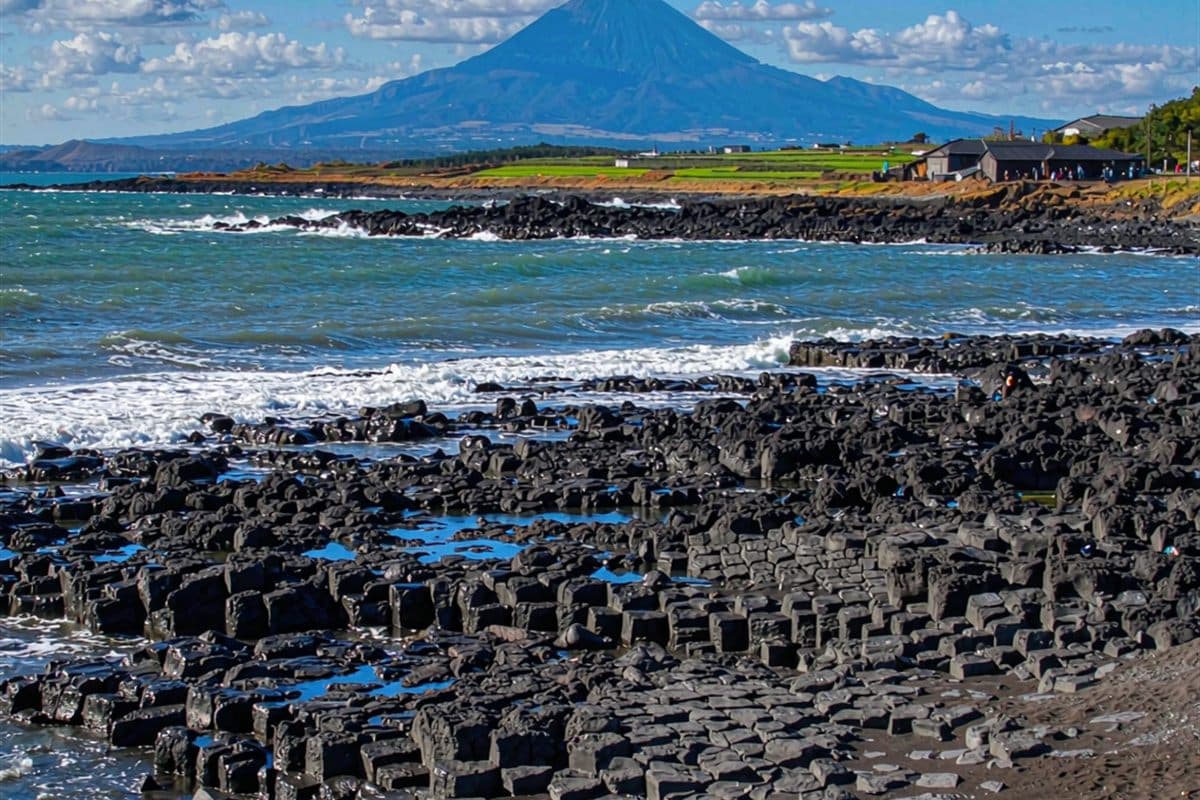
A volcanic island of craters, lava tubes and coastal falls, Korea's favourite getaway.
Overview
Off the southern tip of Korea, Jeju was formed by volcanism and was inscribed as Jeju Volcanic Island and Lava Tubes in 2007. Hallasan in the centre reaches 1,947 metres, the highest in Korea; Seongsan Ilchulbong is the emblematic crater on the coast, and Manjanggul is a lava tube over ten kilometres long. Jeongbang falls, the columnar joint cliffs and Udo island line the coast, and the climate is mild all year.
History
Formed by volcanic activity some two million years ago and long culturally distinct from the mainland, it became a special self-governing province in 2006 and was inscribed in 2007.
Highlights
- •The Seongsan Ilchulbong crater
- •The Manjanggul lava tube
- •Hallasan National Park
- •Jeongbang falls and the columnar joints
Practical tips
- •Public transport is limited; a car is much easier
- •The coast is windy — take care on the rocks
Practical information
- Best time
- April-June, September-October
- Tickets
- Most natural sites are free
- Opening hours
- All day
- Local food
- Jeju black pork, seafood stew, tangerines
- Getting around
- About an hour by air from Seoul, or three hours by ferry from Busan.
- Visa
- A visa is required; apply about a month in advance.
Traveller reviews
…