Busan
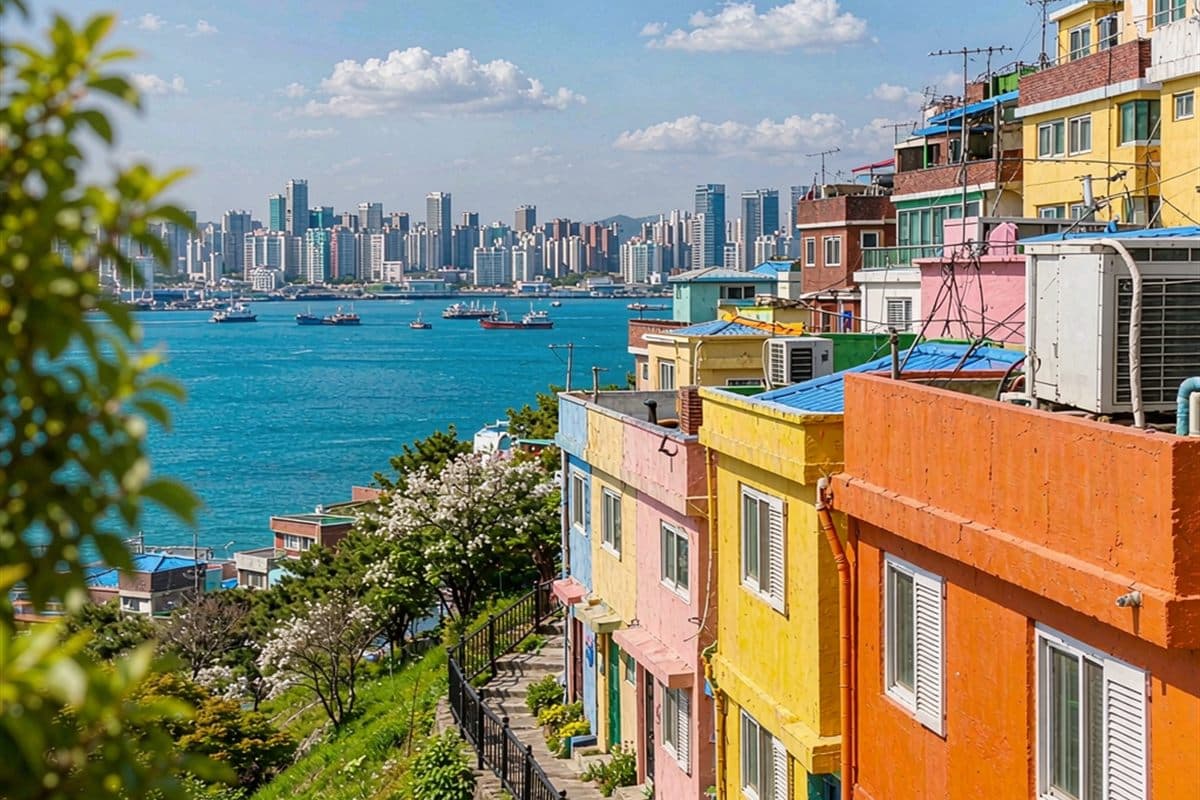
Korea's second city, where the sea, hills and art villages meet in a harbour town of distinctive character.
Overview
Busan is South Korea's second largest city, known for Haeundae beach, Gamcheon Culture Village and fresh seafood.
History
Busan is an important natural deep-water harbour on the Korean peninsula with a long history. It officially opened to trade after the Treaty of Ganghwa in 1876, becoming one of Korea's earliest open ports. During the Korean War from 1950 to 1953 it was the only city not occupied, serving as the provisional capital and sheltering millions of refugees. After the war these refugees built homes up the hillside of Gamcheon, creating today's Gamcheon Culture Village, often called the Machu Picchu of Busan. It has grown into Korea's most important port city and a leading destination.
Highlights
- •Haeundae, one of Asia's widest beaches
- •The pastel-coloured hillside houses of Gamcheon Culture Village
- •Fresh seafood at Jagalchi market
- •The seaside temple of Haedong Yonggungsa
- •The Busan International Film Festival each October
Practical tips
- •KTX high-speed rail from Seoul takes about 2.5 hours
- •Prices at the seafood market are reasonable
Practical information
- Best time
- Year-round
- Tickets
- Haeundae beach free; Gamcheon Culture Village about KRW 2,000
- Opening hours
- City open all day; the culture village roughly 9:00 to 18:00
- Local food
- Pork soup rice, seafood pancake and fish cake
- Getting around
- The metro covers the main sights, and Haeundae and Gwangalli are reached directly by metro
- Visa
- A visa is required, and in some cases a K-ETA electronic travel authorisation may be applied for. Check the latest announcements from the Korean embassy.
Traveller reviews
…