Babylon
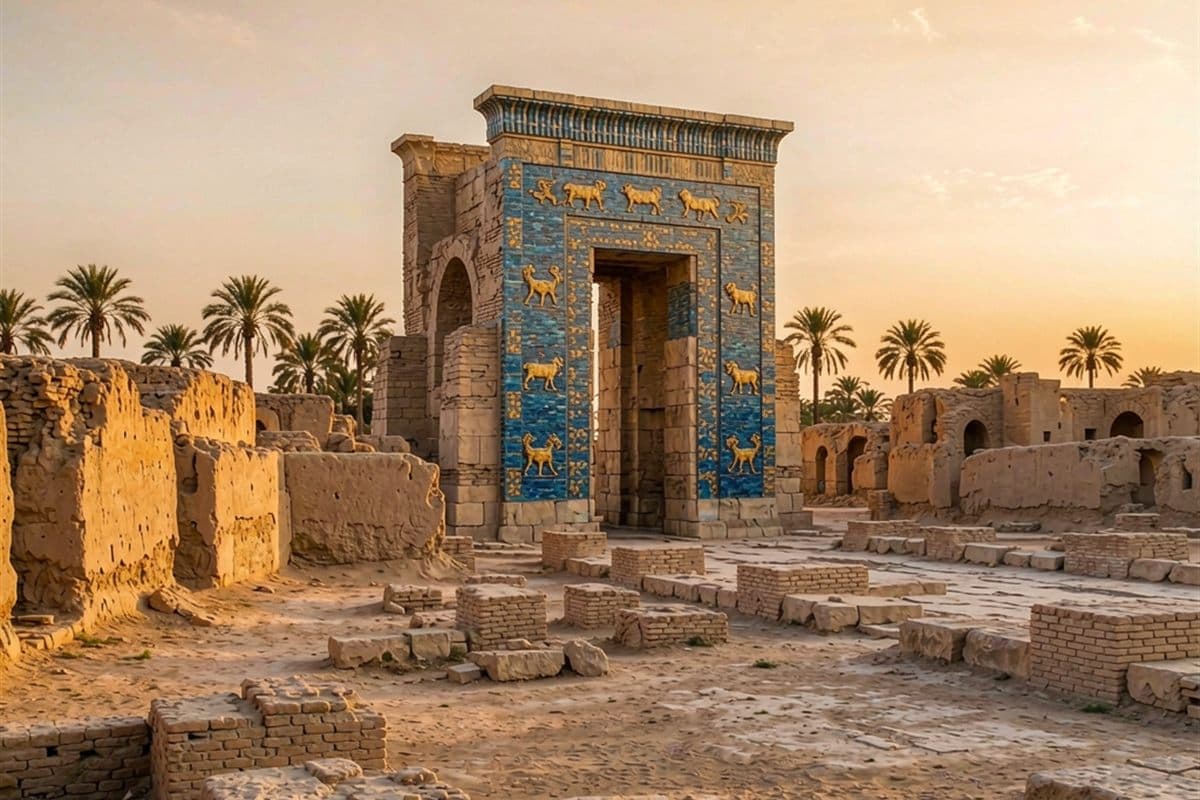
The most celebrated ancient site in Mesopotamia, where Nebuchadnezzar II's palace, a reconstructed Ishtar Gate and the Processional Way stand together.
Overview
Standing on the Euphrates, Babylon grew under Hammurabi in the 18th century BC and peaked under Nebuchadnezzar II of the Neo-Babylonian empire, famed for its walls, ziggurat and the legend of the Hanging Gardens. What remains includes palace foundations, fragments of lion reliefs and the Ishtar Gate and Processional Way rebuilt in the 1980s with modern brick beside the ancient fabric. It joined the World Heritage List in 2019.
History
An important city-state from the 18th century BC and capital of the Neo-Babylonian empire, it declined after Persia absorbed it in 539 BC and saw systematic excavation from the 20th century.
Highlights
- •The reconstructed Ishtar Gate
- •The Processional Way and lion reliefs
- •Nebuchadnezzar's palace foundations
- •The basalt Lion of Babylon statue
Practical tips
- •There is little shade — go early or late
- •Reconstruction brick differs in colour from the ancient brick; look closely
Practical information
- Best time
- November-March
- Tickets
- Around IQD 25,000
- Opening hours
- 8:00-17:00
- Local food
- Iraqi kebab, Masgouf grilled fish
- Getting around
- About 10 km from Hillah, roughly two hours by car from Baghdad.
- Visa
- A visa is required and an e-visa is available; confirm the latest policy and travel advisories in advance.
Traveller reviews
…