Abu Simbel
★ 4.9🇪🇬 Abu SimbelSuggested visit 2-3 hoursBest season October to March, avoiding the summer heat
World HeritageHistoric siteArchaeological site
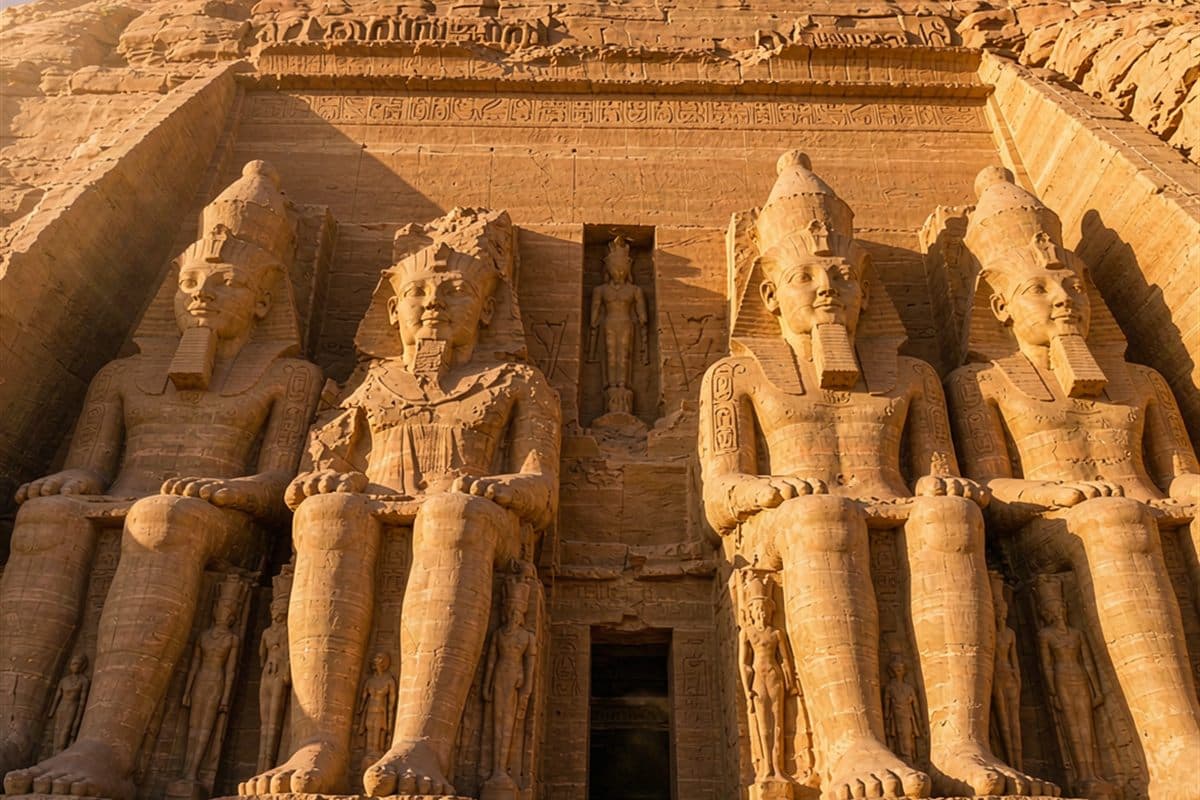
Two temples carved into the cliffs by Ramses II, relocated wholesale in the 1960s to escape the rising Nile.
Overview
Carved by Ramses II in the 13th century BC, the Great Temple at Abu Simbel has four seated colossi about 20 metres tall on its facade; twice a year, on 22 February and 22 October, sunlight penetrates to the sanctuary and lights the innermost statues. The smaller temple beside it is dedicated to Queen Nefertari. In the 1960s the whole complex was cut apart and moved uphill to escape Lake Nasser.
History
Commissioned by Ramses II in the 13th century BC, dismantled and rebuilt between 1964 and 1968 in an international operation coordinated by UNESCO, and inscribed on the World Heritage List in 1979.
Highlights
- •The four 20-metre colossi
- •The sun alignment lighting the sanctuary
- •The smaller temple of Nefertari
- •The evening sound and light show
Practical tips
- •Trips usually leave Aswan early under convoy
- •No flash inside; the interior is dim
Practical information
- Best time
- October-March
- Tickets
- About EGP 600 for foreign visitors
- Opening hours
- 5:00-18:00
- Local food
- Nubian roast chicken, ful medames, flatbread
- Getting around
- About three to four hours by road from Aswan, or 45 minutes by air.
- Visa
- A visa is required, available as an e-visa or on arrival.
Traveller reviews
…