Atacama Desert
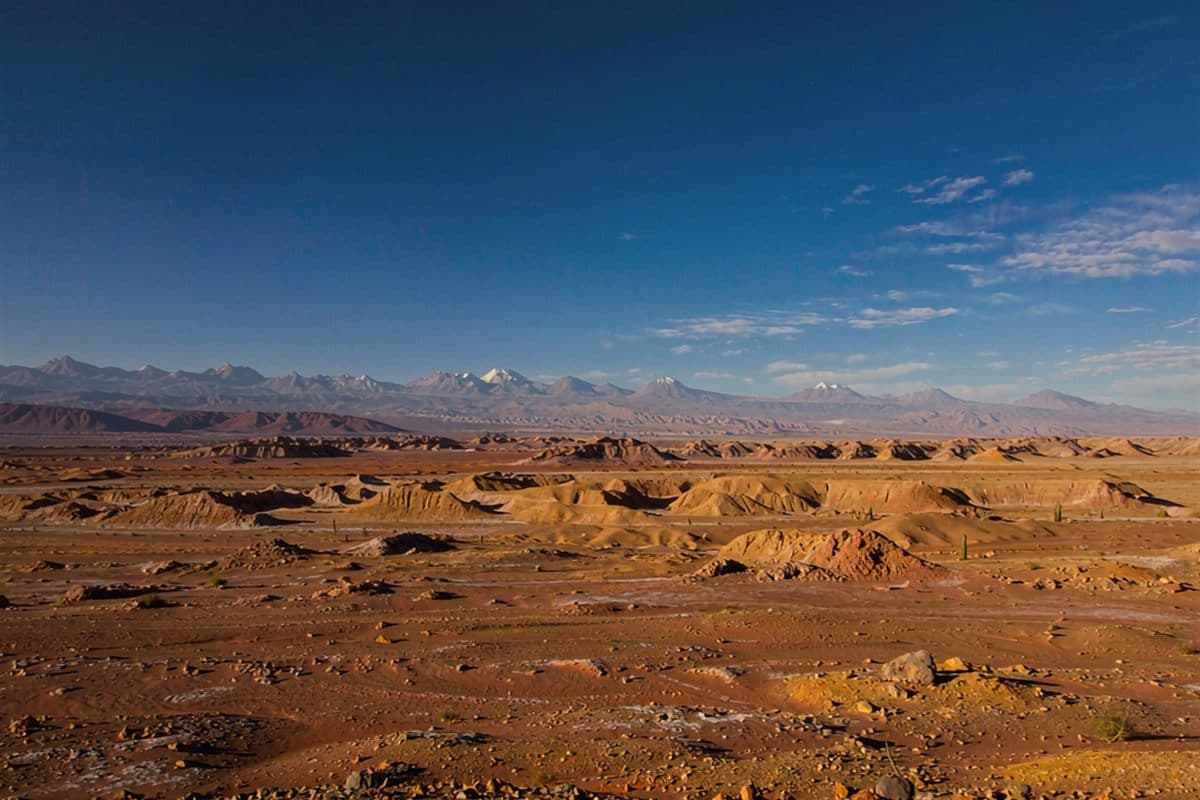
The driest desert on earth, where Moon Valley, flamingo-filled salt flats and the planet's clearest night skies form a surreal landscape.
Overview
Atacama is one of the driest deserts in the world, its Moon Valley, geysers and salt lakes creating a landscape that feels like another planet.
History
The Atacama Desert lies between the Andes and the Pacific and is the driest region on earth, with some areas recording no rainfall for centuries. Its distance from industrial areas and its high altitude give it the clearest night skies on the planet, drawing international observatories including ESO's ALMA array. The Inca empire left ruins along the high plateau, and Spanish colonists came in search of minerals. The town of San Pedro de Atacama is the base for desert exploration.
Highlights
- •El Tatio geysers erupting at dawn after a 4 am start
- •The orange-red rock layers of Moon Valley at sunset
- •Pink flamingos on the high-altitude salt flats
- •Stargazing above 5,000 metres under the clearest skies on earth
- •Hiking red canyons and banded rock formations
Practical tips
- •Set off at dawn to see the geysers
- •Night sky observation here is unmatched
Practical information
- Best time
- March to November
- Tickets
- Moon Valley about CLP 3,000; geysers about CLP 10,000
- Opening hours
- Natural sites open all day; geysers require a pre-dawn departure around 4:00
- Local food
- Desert barbecue, quinoa dishes and pisco
- Getting around
- San Pedro de Atacama is walkable, and the sights are reached on tours or by hired car
- Visa
- A tourist visa is required; Chinese citizens holding a valid US visa with at least six months remaining may enter visa-free, subject to Chilean foreign ministry announcements.
Traveller reviews
…