Great Barrier Reef
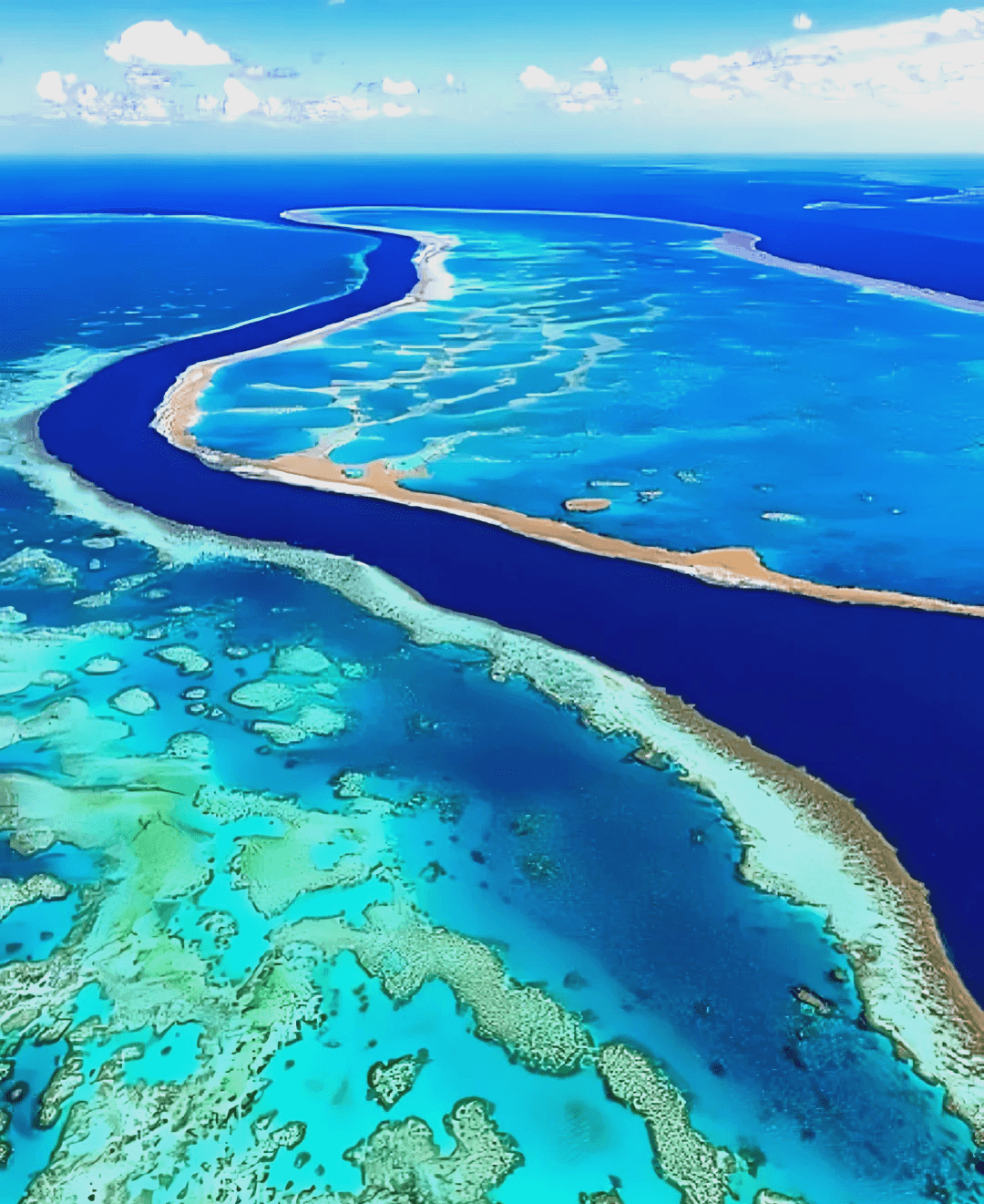
The largest coral reef system in the world, 2,300 kilometres of living wonder supporting thousands of marine species.
Overview
The Great Barrier Reef is the largest coral reef system in the world, with rich marine life and spectacular coral, and a paradise for divers.
History
Coral has been forming here for hundreds of millions of years, though most existing reef structure is less than 10,000 years old. Aboriginal Australians have lived in the region for at least 40,000 years. In 1770 the British explorer James Cook navigated the reef and named many of its features. The Great Barrier Reef Marine Park was established in 1975 and the reef became a natural World Heritage Site in 1981. Repeated coral bleaching driven by climate change has made its protection a global concern.
Highlights
- •Swimming among colourful coral and tropical fish
- •Aerial views of Heart Reef and other photogenic formations
- •The thrill of a first snorkel over the reef
- •Coral ecosystems seen from a glass-bottomed boat
- •The sapphire sweep of the reef from a helicopter
Practical tips
- •Cairns and Airlie Beach are good bases
- •Both snorkelling and diving are highly recommended
Practical information
- Best time
- June to October
- Tickets
- Reef trips about AUD 150 to 300 including equipment and lunch
- Opening hours
- Tours depart throughout the day
- Local food
- Tropical fruit, mud crab and Australian barbecue
- Getting around
- Cairns and Brisbane have domestic flights; the reef is reached by boat or helicopter
- Visa
- A Visitor visa (subclass 600) is required and can be applied for entirely online. Proof of funds and ties to your home country are needed, so apply at least a month ahead.
Traveller reviews
…